
Glimpses of AI give thought to what may be
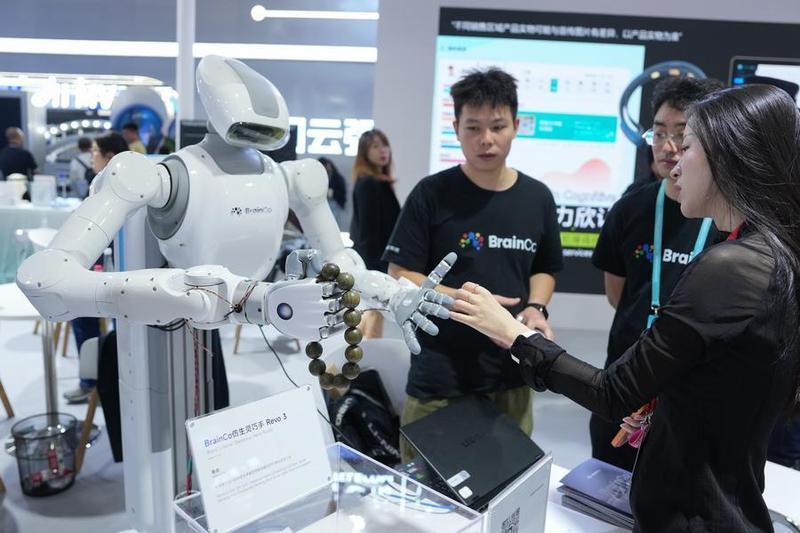
A staff member demonstrates a humanoid robot imitating the fine movements of human hands at the 2026 World Internet Conference (2026 WIC) Light of Internet Expo in Wuzhen, East China's Zhejiang province, Nov 2, 2026.
Near Andufang Wharf in Wuzhen, Zhejiang province, a visitor stopped to buy a coffee after receiving a recommendation from a shopkeeper named Xiaomai. No ordinary shopkeeper, Xiaomai was an artificial intelligence-powered robot and the transaction took place outside the exhibition halls of the 2026 World Internet Conference Wuzhen Summit.
I had come to Wuzhen to cover the summit, which was taking place Nov 2-5. Inside the exhibition halls, large models, software agents and robots seemed to be everywhere. For a moment, I wondered whether I had walked into an internet conference or an AI show. The applications on display, however, suggested that AI was moving beyond technology demonstrations and into everyday activities.
One forum at the summit helped me understand another part of this change. International standards organizations and technology companies from around the world discussed how AI agents could establish their identities and communicate across different systems. Consider an agent asked to purchase supplies for a company. It might need to check inventory in one system, compare prices in another and verify who has authorized the purchase. For that to happen, different systems must be able to recognize and work with one another. The internet could become more than a place to find information; it could also help AI agents carry out tasks.
Open-source technology was another recurring theme. At the exhibition, a media company based in Jiaxing, Zhejiang, demonstrated its AI short-drama production platform. Give it a sentence, and it could generate a 15-second video in about three minutes, the company said. What caught my attention was not just the speed, but how the platform brought scriptwriting, storyboarding, video generation, editing and sound production together using open-source models. The company said creators could complete the process with a single computer. It offered a glimpse of how open-source AI could lower the barriers to content creation.
At the summit's main forum, I watched a young man play the piano for about a minute using a bionic hand developed by Brain-Co, a neurotechnology company based in Hangzhou, Zhejiang. The device translates signals from muscles and nerves into movements of individual fingers, allowing the wearer to control the prosthetic hand. Watching him play, I found myself thinking less about the technology behind the device than about what it could mean beyond the stage: the ability to perform everyday tasks, pursue interests and regain a degree of independence.
Walking through Wuzhen, I saw AI in different forms: recommending a drink, helping create a short video and enabling someone to play the piano. These applications are at very different stages of development, but they share something important. They show how AI's value will increasingly be judged not by how impressive it looks at an exhibition, but by what it allows people to do in their daily lives.
Source: chinadaily.com.cn

立即打开 读嘉客户端